Signs of Autism in Toddlers
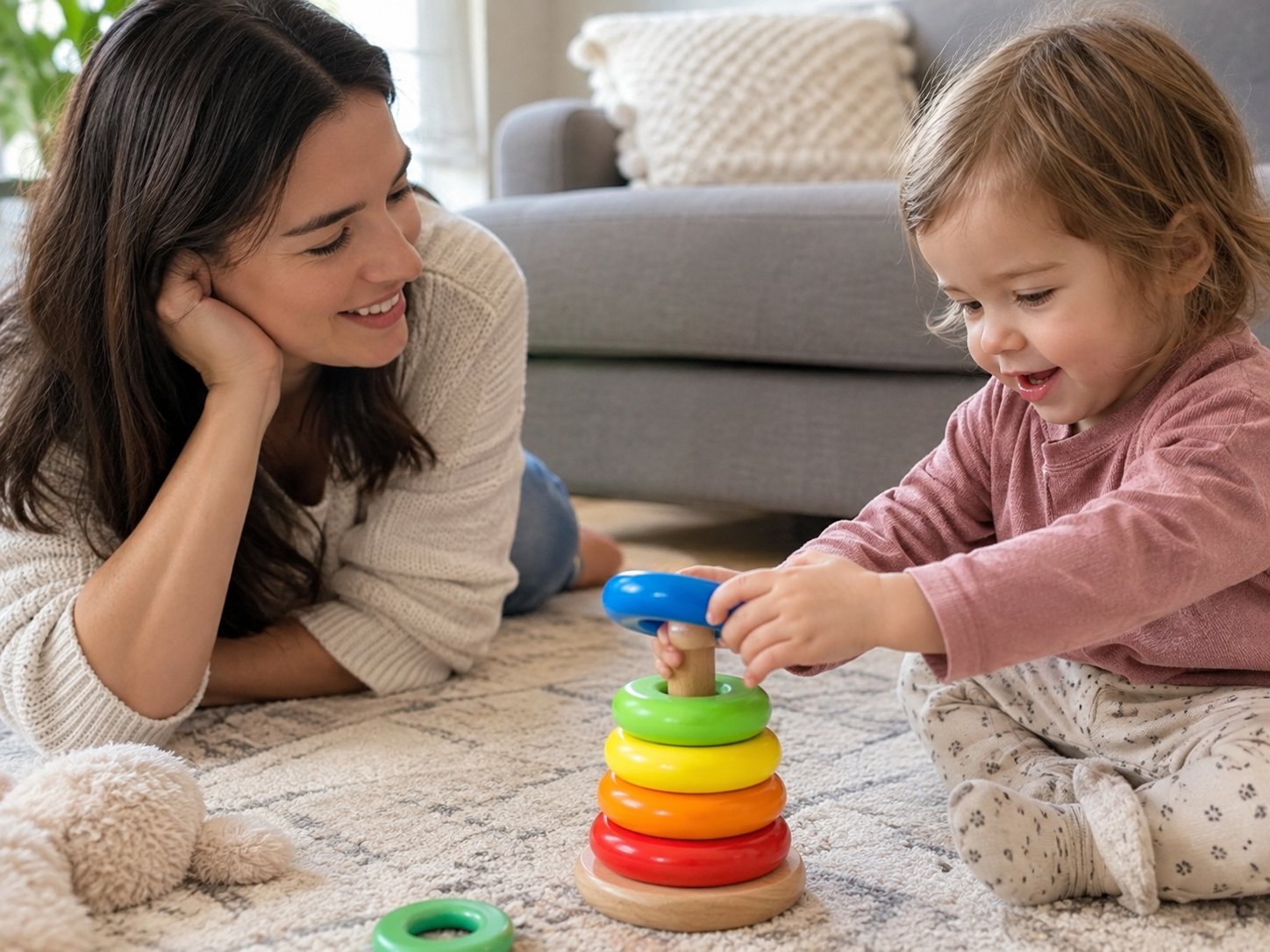
Parent observing a toddler during a face to face play interaction.
Signs of autism in toddlers include differences in social communication, limited pointing or showing, reduced joint attention, repetitive movements, restricted play patterns, and unusual sensory responses. No single sign confirms autism. If you notice several persistent developmental differences or a loss of previously acquired skills, contact your pediatrician for screening and evaluation.
RELATED: Baby’s First 12 Months | The New Parent’s Essential Guide
A toddler who speaks late, avoids pointing, or repeats movements deserves a closer look at their overall development, not a quick label.
The signs of autism in toddlers often involve differences in social communication, shared attention, play, and sensory responses.
Learning how early signs of autism in toddlers differ from typical variation, speech delays, and ADHD helps you recognize when to seek a developmental evaluation and how to support your child.
Signs of Autism in Toddlers
Autism spectrum disorder (ASD) affects how a child communicates, interacts socially, processes sensory information, and responds to routines or changes.
No single behavior confirms autism. The pattern, frequency, developmental history, and impact on everyday interactions matter more than any isolated action. [1]
Look beyond whether your toddler makes eye contact or says words. Notice whether your child tries to share experiences with you.
Does your toddler point toward an airplane to show you something interesting?
Bring you a toy to share enjoyment?
Look between you and an exciting object?
These behaviors involve joint attention, the shared focus between a child and another person. Differences in joint attention are among the clinically important signs of autism in toddlers.
Play also offers useful clues. Some toddlers repeat the same action with toys, such as spinning wheels, lining up objects, or opening and closing doors for extended periods.
Repetition alone is not diagnostic. Pay attention to whether your child also explores toys in varied ways, imitates your actions, and includes you in play.
Another important distinction involves response to social bids. A toddler might respond inconsistently when called by name, especially when absorbed in an activity.
Repeatedly missing their name across different situations deserves attention. Check if they are accompanied by limited gestures or reduced social sharing.
Hearing differences also need consideration, so a hearing assessment is often part of evaluating communication concerns.
Early Signs of Autism in Toddlers
Early signs of autism in toddlers often become easier to recognize between 12 and 24 months. Although developmental differences appear at different ages.
Some children show differences early. Others develop words or social skills and later lose previously acquired abilities.
Any loss of language, gestures, social engagement, or other established skills warrants prompt medical evaluation. [2]
Watch how your toddler communicates without words. Toddler speech delay signs are not enough.
Gestures such as pointing, waving, reaching to be picked up, and showing objects help children communicate before they have extensive spoken language.
A child who rarely uses gestures to share interest, seldom imitates others, or has difficulty coordinating gaze with gestures needs to be checked more closely.
Language development requires more than counting spoken words.
Some autistic toddlers speak several words but rarely use language to share interests or participate in back and forth interaction.
Others use few words and communicate mainly by pulling an adult toward a desired object.
These differences matter because communication includes gestures, facial expressions, understanding, and social purpose. Not speech alone.
Consider the difference between a toddler who occasionally plays alone and one who consistently struggles to involve other people in enjoyable activities.
Look for patterns across meals, playtime, childcare, and family routines.
These observations help clinicians evaluate early signs of autism in toddlers in context instead of relying on one memorable incident.
A practical next step is to document examples for one or two weeks, provided you do not delay seeking help.
Record how your child requests things, responds to their name, and shares attention. Watch how they imitate actions, play with toys, and react to changes.
Short videos of everyday behavior, when appropriate, also help clinicians understand what you observe at home.
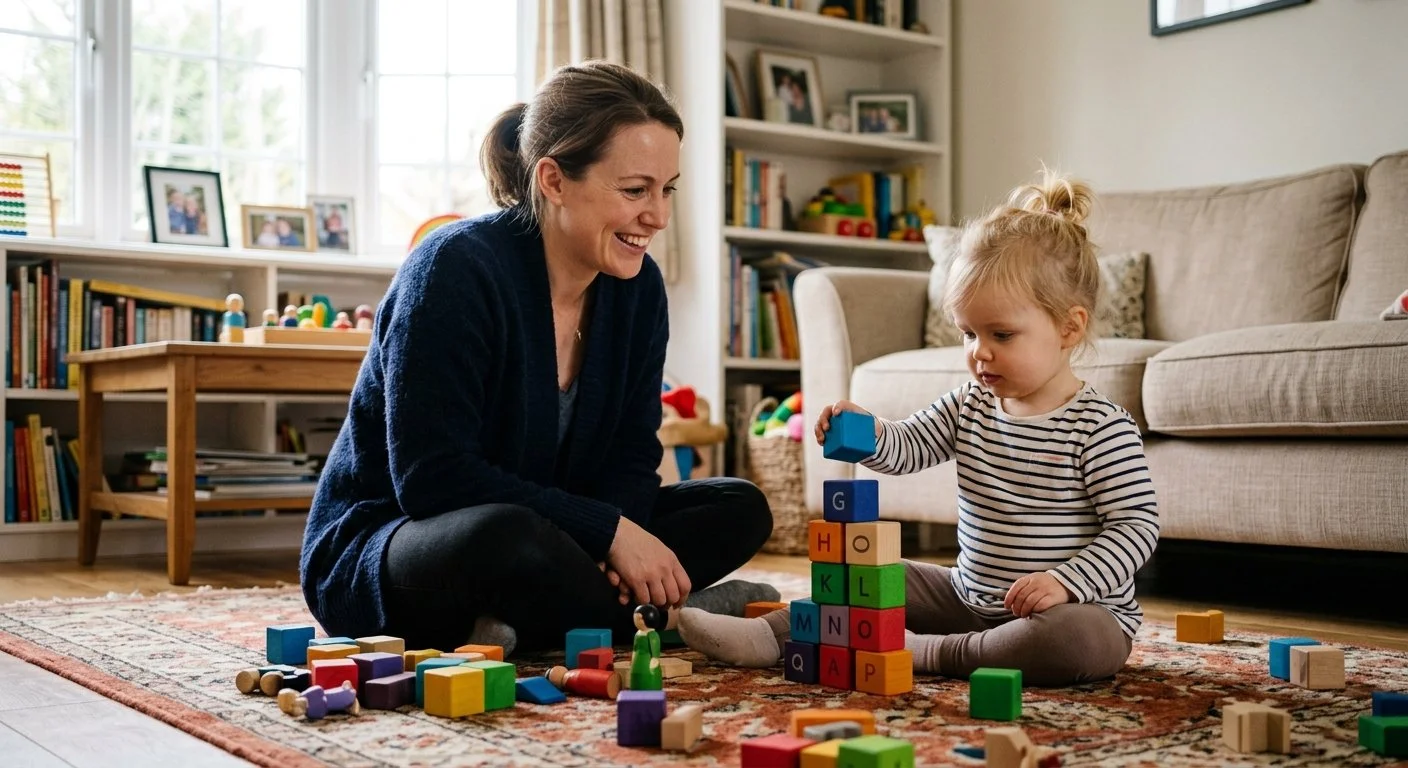
Toddler playing with toy blocks while a parent observes social engagement.
Autism vs ADHD in Toddlers
Comparing autism vs ADHD in toddlers, ask what is the reason behind a behavior? Not just what does the behavior look like.
Both conditions involve developmental differences. Some children have both.
A toddler who moves constantly, interrupts activities, or struggles to stay engaged does not automatically have ADHD or autism.
Autism primarily involves differences in social communication and interaction. Couple that with restricted or repetitive behaviors and interests.
ADHD involves developmentally excessive inattention, hyperactivity, and impulsivity.
In toddlers, these patterns overlap with ordinary developmental behavior. Making diagnosis particularly difficult without a complete evaluation.
For example, a toddler who frequently changes activities might be seeking stimulation, struggling with attention regulation, or responding to a confusing environment.
Does the child also have persistent differences in joint attention, social reciprocity, gestures, or flexible play?
These details provide more useful information than activity level alone.
A toddler with ADHD might readily point to share excitement, imitate others, and engage in reciprocal social play. All while still struggling to wait, focus, or regulate impulses.
An autistic toddler might show sustained interest in a preferred activity but have difficulty shifting attention toward another person's attempt to engage.
Neither example applies to every child, and these behaviors cannot establish a diagnosis by themselves.
When discussing autism vs ADHD in toddlers with your pediatrician, describe specific behaviors across different settings.
Explain what happens before a behavior, how your child responds to social interaction, and whether the pattern affects daily functioning.
A developmental evaluation should consider communication, attention, adaptive skills, and other possible explanations.
Rather than forcing an early choice between two diagnoses.
Is Hand Flapping Normal in Toddlers?
Parents often ask, “Is hand flapping normal in toddlers?” Yes.
Young children sometimes flap their hands when excited, overwhelmed, frustrated, or deeply interested in something.
Repetitive movements also occur during typical development. So hand flapping by itself does not indicate autism.
The more useful question is how the movement fits into your child's broader developmental profile.
Does your toddler flap briefly when excited and then return to varied play? Or does repetitive movement occur frequently alongside limited gestures and reduced shared attention?
Any unusual sensory responses, or difficulty with social interaction? The combination deserves a closer look.
Other toddler repetitive behaviors include rocking, spinning, and repeatedly opening and closing objects.
Arranging toys in a fixed pattern, and repeating the same play sequence too. Some autistic children find repetition comforting or enjoyable.
Repetitive actions also occur in children without autism, and their presence alone cannot distinguish one developmental profile from another.
Parents also ask about sensory seeker vs autism. A sensory seeker actively pursues sensations such as movement, pressure, sounds, or particular textures.
For example, a toddler might jump repeatedly, crash into cushions, or seek spinning activities.
Sensory seeking describes a pattern of sensory behavior, not a diagnosis. Autistic children sometimes seek sensory input, avoid certain sensations, or experience both patterns.
Consider whether sensory preferences interfere with daily activities or occur alongside other developmental differences.
A child who seeks movement but communicates socially, shares interests, and adapts flexibly might have sensory preferences without meeting autism criteria.
Now you know if you’re a parent wondering, “Is hand flapping normal in toddlers?” Indeed it is.
Persistent social communication differences, however, need a broader evaluation. Sensory behavior alone is not enough.

Parent encouraging an 18 month old toddler to point toward a picture book.
18 Month Old Not Pointing
An 18 month old not pointing to share interest deserves prompt discussion with a pediatrician.
Pointing is not merely a way to request food or toys. Children also point to direct another person's attention toward something interesting, such as a dog across the street.
This type of pointing helps reveal how a child coordinates communication and shared attention. [4]
Notice whether your toddler points to request something, points to show you something, follows your pointing gesture, or looks between an object and your face.
These behaviors provide different information. A child might reach toward a snack without using a gesture to share excitement about a passing truck.
Clinicians consider the full range of gestures and social communication when assessing development.
If your 18 month old is not pointing, also observe waving, showing objects, imitation, response to name, understanding of familiar words, and attempts to involve you in play.
Limited gestures combined with other social communication differences increase concern for autism. Although other developmental or communication differences also warrant consideration.
Parents frequently search for late talker vs autism because both situations might involve a toddler who uses few spoken words.
A late talker might understand language, use gestures effectively, follow another person's gaze, and share enjoyment despite having limited speech.
An autistic child might have a speech delay alongside differences in joint attention, social reciprocity, or repetitive behavior.
These are patterns, not rules. And some autistic children develop spoken language early.
Toddler speech delay signs deserve attention regardless of the suspected cause. Ask about receptive language, expressive language, gestures, imitation, and social engagement.
A speech language pathologist evaluates communication, while a developmental specialist assesses the broader developmental picture.
A hearing evaluation also helps identify hearing loss as a possible contributor.
The American Academy of Pediatrics recommends autism specific screening at 18 and 24 months, with ongoing developmental surveillance. If concerns arise between screening visits, request an evaluation rather than waiting for the next scheduled screening. [3]
Do not wait for your child to reach a particular age or for every possible symptom to appear.
Notice Several Developmental Differences?
The most useful response to suspected developmental differences is an assessment, not a wait and see approach.
Contact your pediatrician and describe the specific behaviors you observe.
Ask about a standardized autism screening, a developmental evaluation, a hearing test, and a referral to early intervention when appropriate.
In the United States, you do not need to wait for a formal autism diagnosis to ask your state's early intervention program about an evaluation for children younger than 3.
Recognizing the signs means looking at the whole child, including communication, shared attention, play, sensory preferences, and repetitive behaviors.
A late talker, toddler repetitive behaviors like hand flapping, or an 18 month old not pointing does not automatically have autism.
Patterns across several areas provide more useful information. Write down your observations.
If you notice persistent developmental differences or a loss of previously acquired skills, contact your pediatrician and request an evaluation.
Bring your written notes to your appointment rather than waiting for concerns to resolve on their own.
RELATED: How Can I Encourage My Baby’s Language Development?
References:
[1] Hyman, S. L., Levy, S. E., & Myers, S. M. (2020). Identification, Evaluation, and Management of Children With Autism Spectrum Disorder. Pediatrics, 145(1), e20193447. https://doi.org/10.1542/peds.2019-3447
[2] Zwaigenbaum, L., Bauman, M. L., Choueiri, R., et al. (2015). Early Identification of Autism Spectrum Disorder: Recommendations for Practice and Research. Pediatrics, 136(Supplement 1), S10-S40. https://doi.org/10.1542/peds.2014-3667C
[3] Lipkin, P. H., & Macias, M. M. (2020). Promoting Optimal Development: Identifying Infants and Young Children With Developmental Disorders Through Developmental Surveillance and Screening. Pediatrics, 145(1), e20193449. https://doi.org/10.1542/peds.2019-3449
[4] Maes, P., Stercq, F., & Kissine, M. (2021). Attention to intentional versus incidental pointing gestures in young autistic children: An eye-tracking study. https://pubmed.ncbi.nlm.nih.gov/34134019/
*Medical Disclaimer: The information provided in this article is for educational and informational purposes only and is not intended to replace professional medical advice, diagnosis, or treatment. The content does not constitute medical advice or establish a physician-patient relationship. Always seek the advice of a qualified healthcare professional regarding any questions or concerns about your child’s development, symptoms, or medical condition.
