Common Baby Illnesses Parents Need to Know

Parent checking an infant for signs of common baby illnesses.
A baby who suddenly feels hot, coughs through the night, refuses a bottle, or develops diarrhea needs prompt parental attention.
Common baby illnesses often have symptom overlap.
Levels of concern differ by age, symptom pattern, and changes in breathing or hydration.
This guide explains baby fever, baby cold symptoms, bronchiolitis, croup cough, ear infection symptoms, and gastroenteritis.
RELATED: Avoiding the Baby Battles: Prepare for Parenthood (digital E-book)
Common baby illnesses include viral colds, fever, bronchiolitis, croup cough, ear infections, and gastroenteritis. Parents are to monitor breathing, hydration, feeding, alertness, temperature, and urine output. Infants 3 months and younger with a temperature of 100.4°F (38°C) or higher need prompt medical evaluation.
Baby Fever: Why Age and Temperature Matter
A baby fever with a temperature of 100.4°F (38°C), or higher in an infant younger than 3 months requires immediate attention from a pediatrician.
The American Academy of Pediatrics clinical practice guideline specifically addresses infants 8 to 60 days old with a temperature of at least 100.4°F or 38°C.
Young infants with fever require structured medical evaluation because serious bacterial infections occur more often during early infancy than in older children. (PubMed)
For older babies, look beyond the thermometer. Watch feeding, alertness, breathing, urine output, skin color, and overall behavior.
Is your baby waking, feeding reasonably well, urinating normally, and returning toward normal behavior between fever episodes?
Or is your baby remaining difficult to wake or refusing several feeds? Each scenario can present a different outcome.
Seek urgent medical care for breathing difficulty, bluish or gray skin, a seizure, severe lethargy, signs of dehydration, or a rapidly worsening condition.
A baby fever reading provides useful information, but the child's overall condition matters too.
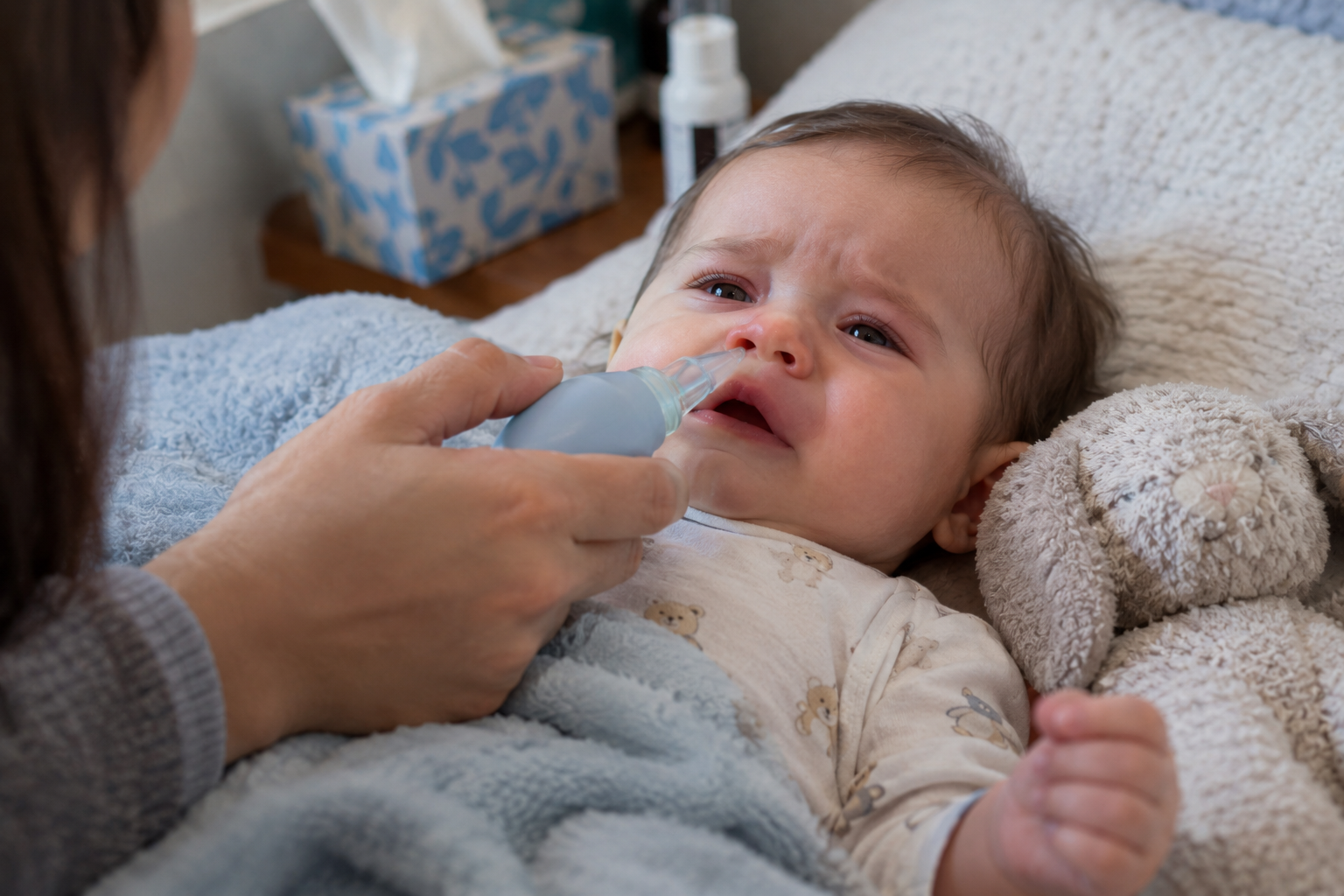
Congested infant experiencing baby cold symptoms.
Baby Cold: When Congestion Needs More Attention
A baby cold often starts with a runny nose, sneezing, congestion, cough, reduced appetite, and disrupted sleep.
Young infants have small nasal passages, so ordinary mucus creates more feeding difficulty than many parents expect.
A congested baby often pauses during feeding to breathe through the mouth, leading to shorter or more frequent feeds.
For a baby cold, comfort and hydration go far rather than eliminating every symptom. Saline drops, gentle nasal suction before feeds and sleep.
These help a congested infant breathe way better. Airway irritants like smoke, vaping aerosols, and strong fragrances need to stay clear.
OTC cough and cold medicines to young children are a no-go.
Unless a pediatric clinician specifically recommends a product and dose.
Contact your pediatrician if breathing becomes hard, feeding decreases, less wet diapers, fever persists, or symptoms get worse.
Bronchiolitis: Watch the Work of Breathing
Bronchiolitis begins like an ordinary upper respiratory infection before moving into the lower airways.
RSV (Respiratory Syncytial Virus) is a common cause, as well as respiratory viruses.
Early symptoms often include congestion and cough.
More concerning signs include rapid breathing, wheezing, nasal flaring, grunting, and visible pulling between or below the ribs.
The American Academy of Pediatrics recommends assessing bronchiolitis severity through history and physical examination, attention to respiratory effort, oxygenation, feeding, and hydration. (American Academy of Pediatrics)
One important distinction separates bronchiolitis from many routine respiratory infections.
The question is not simply whether your baby sounds congested. Ask whether breathing requires extra effort.
A baby who struggles to finish feeding because of breathlessness needs to be examined by a medical professional.
Infants younger than 12 weeks, premature infants, and babies with significant heart or lung conditions face higher risk for severe disease.
AAP guidance also recommends against routine antibiotics, corticosteroids, and albuterol for uncomplicated bronchiolitis. (American Academy of Pediatrics)
Croup Cough: Listen for the Characteristic Cough
Croup cough produces swelling around the upper airway and often causes a distinctive barking cough, hoarse voice, and noisy breathing called stridor.
Symptoms become more noticeable at night. A child who seemed well during the afternoon sometimes appears much more uncomfortable after bedtime.
Croup deserves close observation because upper airway swelling affects breathing rather than simply producing a cough.
For mild croup, keep your baby or young child calm because crying and agitation increase respiratory effort.
Hold your child upright and monitor breathing closely.
A clinician might prescribe a corticosteroid such as dexamethasone when treatment is appropriate.
A Cochrane review involving 45 randomized controlled trials and 5,888 children found glucocorticoids improved croup cough symptoms and reduced return visits or hospital admission. (PubMed)
Seek urgent care for persistent stridor (a high-pitched whistling, breathing sound) while resting, significant chest retractions, and blue or gray lips.
Drooling with difficulty swallowing, unusual sleepiness, or obvious respiratory distress as well.
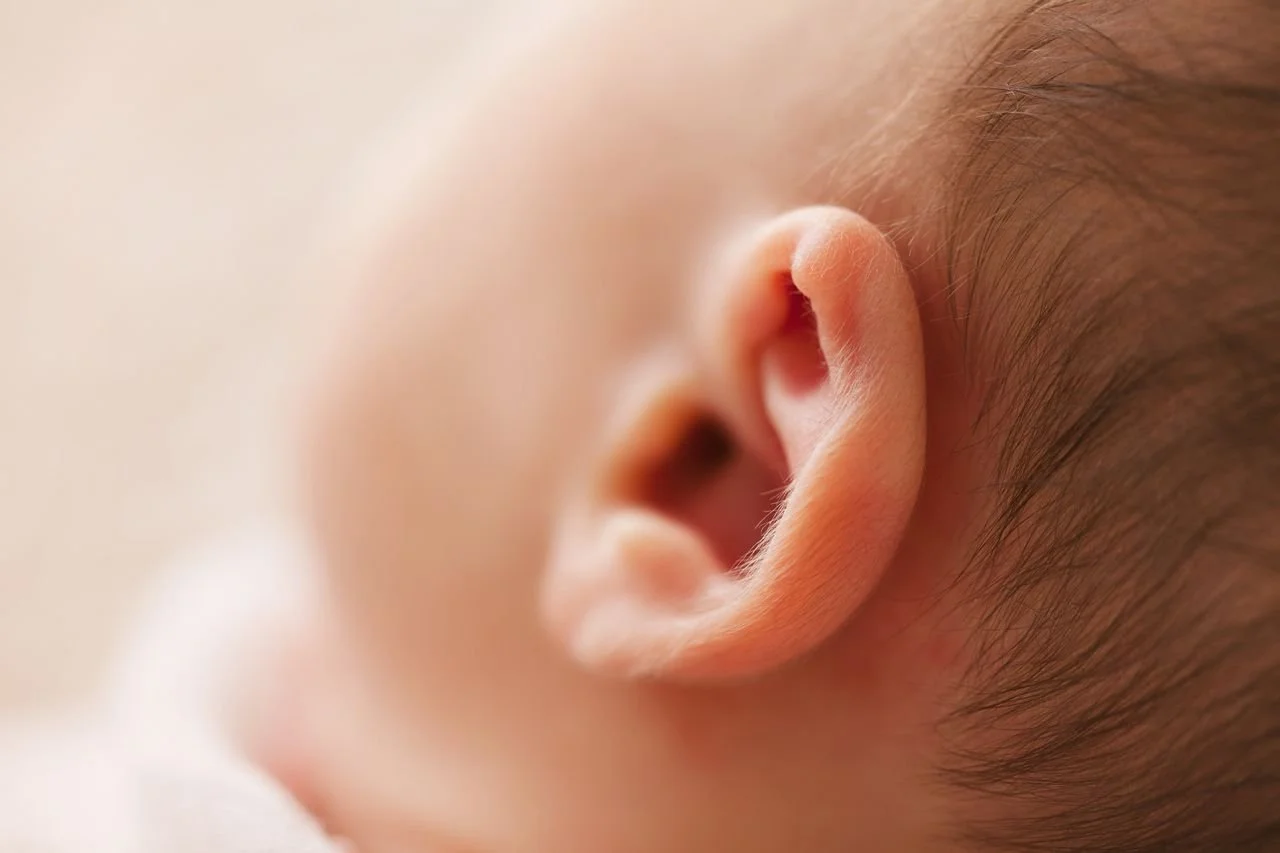
Checking for a possible baby ear infection.
Ear Infection: Why Crying Alone Does Not Confirm One
An ear infection can follow a respiratory infection. Because inflammation and fluid develop behind the eardrum.
Babies lack the language to describe pressure or pain, so parents often notice irritability, disrupted sleep, reduced feeding, or increased crying instead.
Ear pulling alone does not prove an infection. Some babies touch their ears during normal development, teething, or simple exploration.
A true ear infection requires an appropriate examination of the eardrum.
AAP guidance defines acute otitis media using specific findings involving the tympanic membrane and middle ear fluid rather than symptoms alone. (American Academy of Pediatrics)
Pain control also matters. Treatment decisions depend on age, severity, diagnostic certainty, and other clinical factors.
Some uncomplicated cases receive observation rather than immediate antibiotics under appropriate medical guidance.
A persistent fever, significant pain, drainage from the ear, or worsening symptoms means to seek proper care.
Gastroenteritis: Hydration Matters More Than Food
Gastroenteritis usually produces vomiting, diarrhea, abdominal discomfort, and fever.
Viral causes are common among infants and young children. The biggest immediate concern is dehydration.
A baby loses fluid quickly when vomiting or having frequent watery stools, especially when feeding drops at the same time.
With gastroenteritis, monitor wet diapers, tears, mouth moisture, alertness, and feeding.
Follow your pediatrician's advice regarding oral rehydration fluids and feeding.
Breastfed babies should continue breastfeeding unless a clinician gives different instructions.
Formula fed infants usually need continued age appropriate feeding rather than routine formula dilution.
Seek medical attention for repeated vomiting with an inability to keep fluids down, fewer wet diapers, and blood in stool.
Or severe abdominal swelling, unusual sleepiness, and signs of poor circulation.
Young infants with significant vomiting or diarrhea deserve a lower threshold for medical assessment.
Common Baby Illnesses: The Symptoms Worth Tracking
The most useful information for your pediatrician comes from patterns rather than isolated symptoms.
Record the highest temperature, time of onset, number of wet diapers, feeding amounts, vomiting episodes, stool frequency, breathing changes, sleep behavior, and medications given.
A short symptom timeline often provides more clinical value than saying your baby has been sick for a few days.
Common baby illnesses also become easier to distinguish when you know which symptom deserves priority.
Breathing effort outranks the sound of a cough. Hydration status matters more than the exact number of loose stools.
A young infant's fever deserves faster attention than the same temperature in an older child.
The AAP bronchiolitis guideline specifically identifies age younger than 12 weeks, prematurity, cardiopulmonary disease, and immunodeficiency as risk factors for severe disease. (American Academy of Pediatrics)
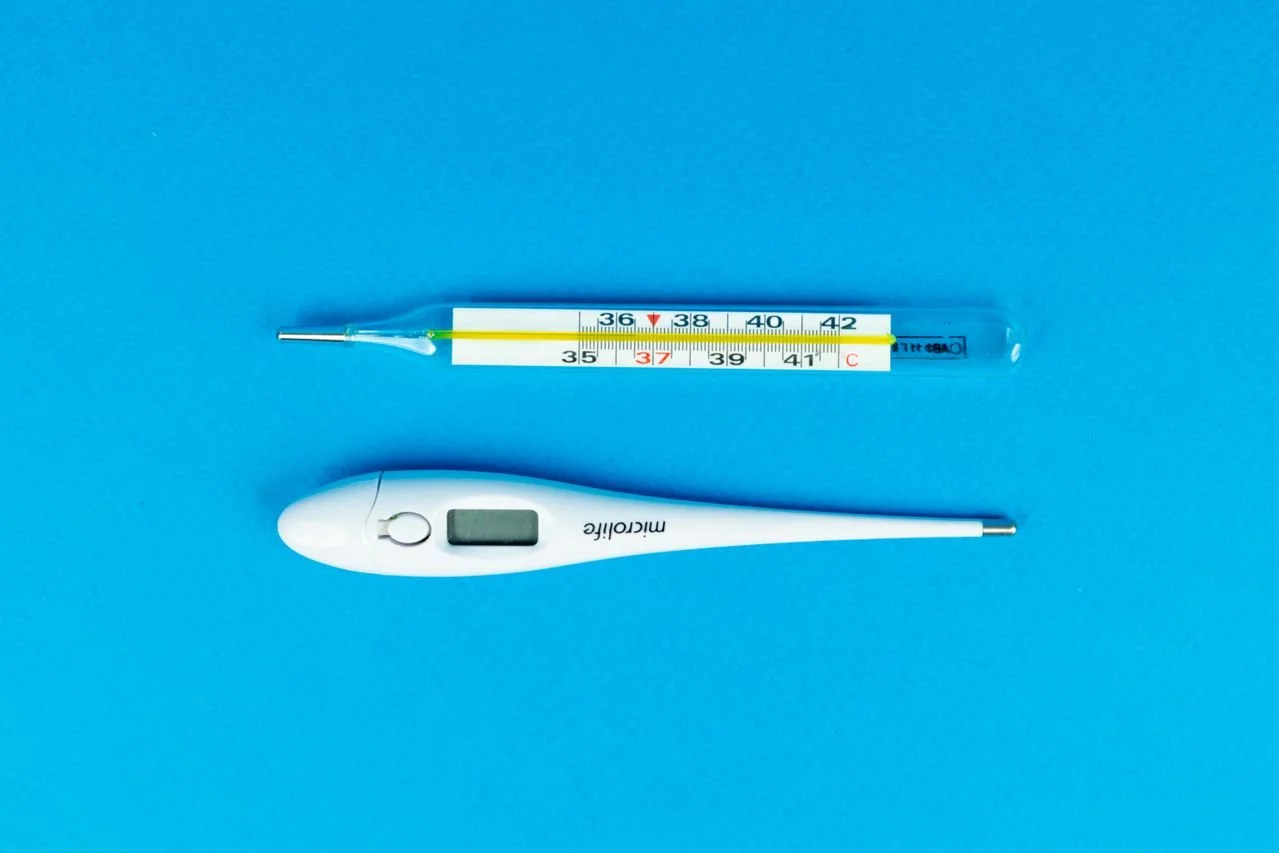
Picture of baby thermometers.
Common Baby Illnesses: When Home Care Is Not Enough
Most parents need a simple escalation framework. Call your pediatrician when symptoms persist, worsen, interfere with feeding, or produce concerns about hydration.
Seek urgent medical attention for serious breathing difficulty, blue or gray skin, severe lethargy, seizures, significant dehydration, or a rapidly deteriorating child.
For infants younger than 3 months, a temperature of 38°C or higher requires prompt medical assessment.
Common baby illnesses do not follow identical rules.
A stuffy nose might require careful home care in an otherwise comfortable older infant.
The same congestion combined with poor feeding and rapid breathing deserves immediate evaluation.
Clinical guidelines emphasize assessment based on the child's age, appearance, physical findings, severity, and ability to maintain hydration rather than relying on one symptom alone. (American Academy of Pediatrics)
When your instincts tell you something looks significantly different from your baby's normal behavior, contact a healthcare professional.
Common Baby Illnesses: What Parents Should Remember
Understanding baby cold symptoms means learning to recognize patterns, not memorizing every diagnosis.
Baby fever requires special attention in young infants. Baby cold symptoms often focus on congestion and feeding difficulty.
Bronchiolitis requires close observation of breathing effort.
Croup cough requires attention to stridor and airway distress. An ear infection requires proper examination.
Gastroenteritis requires careful hydration monitoring. Save this guide for future reference and share it with another new parent.
Speak with your pediatrician whenever your baby's symptoms fall outside your normal comfort level.
RELATED: Effective Strategies for Soothing a Fussy Baby
References:
Ralston SL, Lieberthal AS, Meissner HC, et al. Clinical Practice Guideline: The Diagnosis, Management, and Prevention of Bronchiolitis. Pediatrics. 2014. (American Academy of Pediatrics)
Lieberthal AS, Carroll AE, Chonmaitree T, et al. The Diagnosis and Management of Acute Otitis Media. Pediatrics. 2013. (American Academy of Pediatrics)
Aregbesola A, Tam C, Kothari A, et al. Glucocorticoids for croup in children. Cochrane Database of Systematic Reviews. 2023. (PubMed)
Pantell RH, Roberts KB, Adams WG, et al. Evaluation and Management of Well-Appearing Febrile Infants 8 to 60 Days Old. Pediatrics. 2021. (PubMed)
