Growth Spurts in Babies Explained
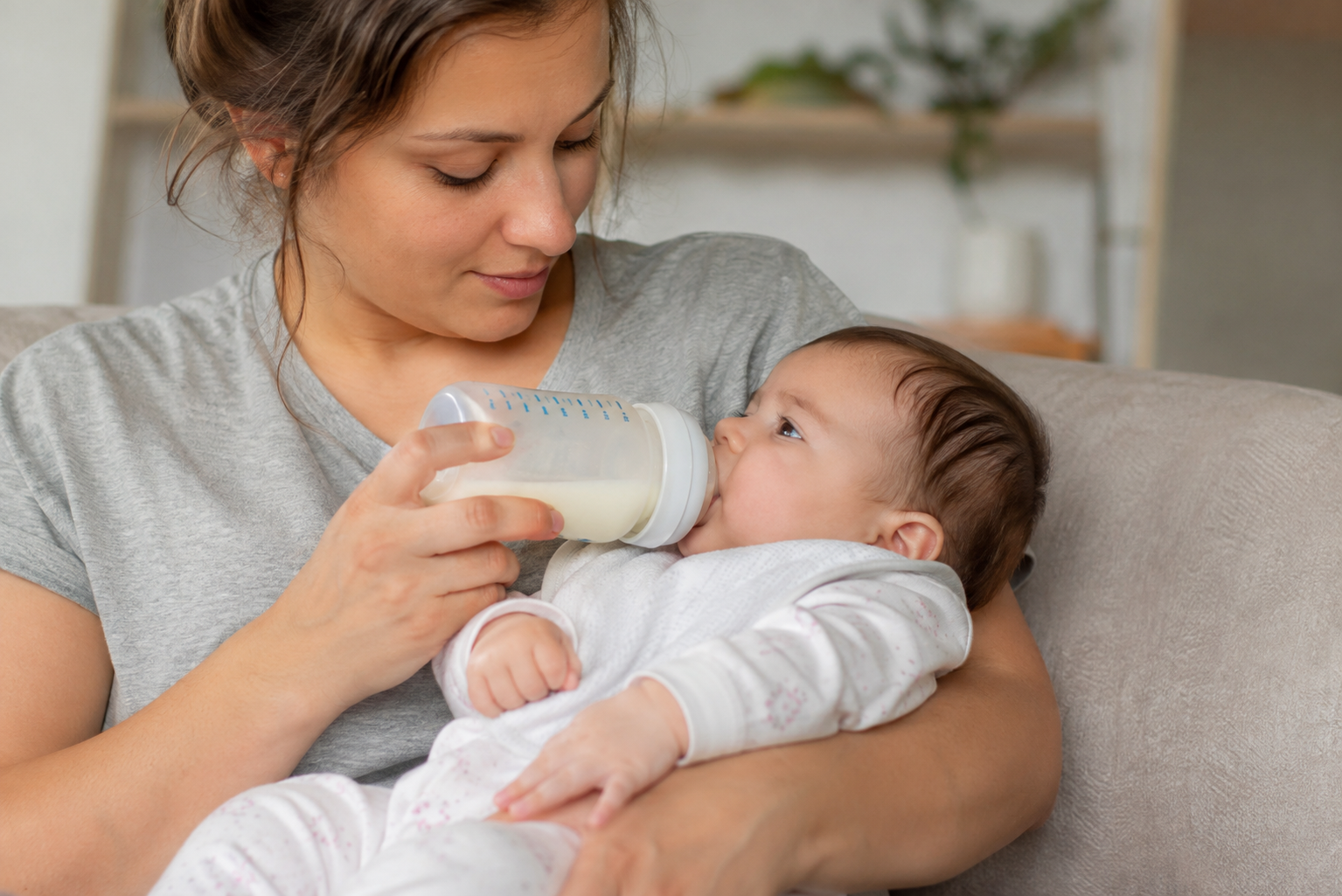
Baby experiencing a healthy growth spurt while feeding.
Parents notice sudden changes in feeding, sleeping, and behavior that seem to magically appear overnight.
These growth spurts in babies often leave caregivers wondering whether their child is simply hungrier, fussier, or going through a developmental stage.
Understanding baby growth spurts, recognizing baby growth spurt signs, and knowing when do babies have growth spurts can make them far less stressful.
This guide explains the science behind newborn growth spurts, how long they typically last, and what parents can realistically expect during each stage of infancy.
RELATED: Fitness For Busy Moms
What are Growth Spurts in Babies?
Growth spurts in babies are rapid physical and developmental growth during the 1st year. Common baby growth spurt signs include increased feeding, disrupted sleep, fussiness, and clinginess. Growth spurts last between two and seven days, occurring at 2-3 weeks, 6 weeks, 3 months, 6 months, and 9 months of age.
What Happens During Growth Spurts in Babies?
Growth spurts explained begins with understanding that babies do not grow at a steady pace.
Instead, their bodies develop in bursts, with rapid changes in height, weight, brain development, and muscle coordination occurring over just a few days.
During these periods, growth spurts in babies are driven by increased metabolic demands, hormonal activity, and neurological development.
Many parents focus only on physical growth, but baby growth spurts also support sensory processing, motor skills, and cognitive milestones.
This is why a baby who suddenly becomes fussier may wake up days later smiling, rolling over, or interacting with their environment in new ways.
Looking at a baby growth spurt timeline instead of isolated behaviors helps parents recognize patterns rather than assuming something is wrong.
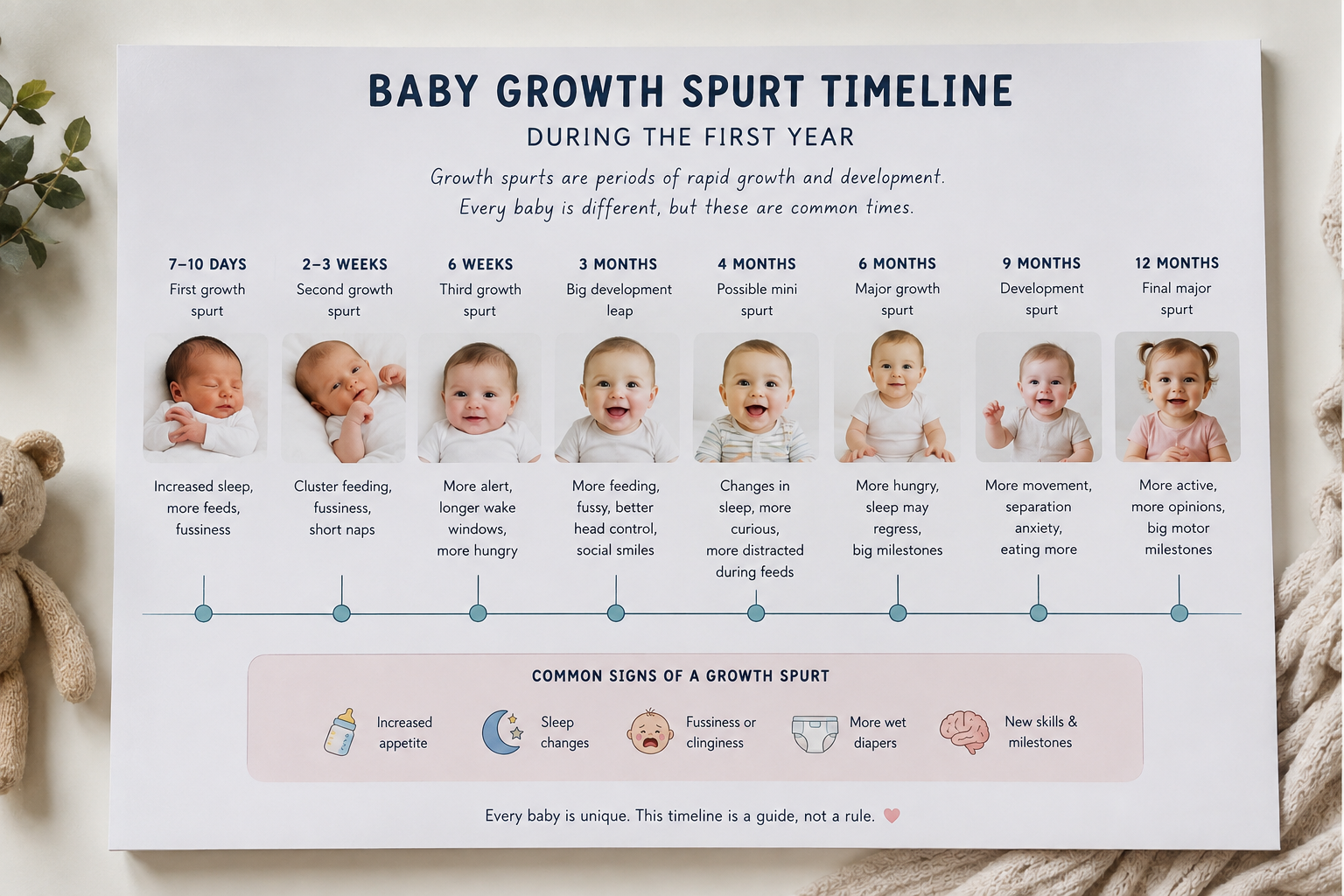
Baby growth spurt timeline during the first year of life.
When Do Babies Have Growth Spurts?
One of the most common parenting questions is, “When do babies have growth spurts?”
Although every infant develops at their own pace, several predictable windows appear during year one.
Most newborn growth spurts occur around 7-10 days after birth.
Followed by additional spurts around 2-3 weeks, 6 weeks, 3 months, 6 months, and 9 months.
The well-known 3 month growth spurt baby stage often surprises parents because babies suddenly demand more frequent feedings while becoming increasingly alert and active.
Rather than treating the baby growth spurt timeline as a rigid schedule, pediatricians recommend viewing it as a flexible guide.
Premature babies, breastfed infants, and formula-fed babies may experience growth spurts by age slightly differently.
RELATED: Fitness For Busy Moms
Baby Growth Spurt Signs
Learning to recognize baby growth spurt signs can prevent unnecessary worry.
One of the earliest indicators is a sudden increase in appetite.
Parents often notice their baby feeding more during growth spurt periods.
Sometimes requesting feedings every hour despite previously following a predictable schedule.
Other common baby growth spurt symptoms include:
Increased fussiness
More frequent waking
Temporary sleep disruptions
Increased clinginess
Longer nursing sessions
Short naps followed by frequent feeding
These baby growth spurt signs are not signs that something is wrong.
Instead, they reflect the body's increased demand for calories and energy needed to support rapid development.
Viewing these behaviors through the lens of growth spurts explained often provides reassurance that these changes are both expected and temporary.

Parent comforting infant showing common baby growth spurt signs.
Why Baby Feeding More During Growth Spurts Is Completely Normal
One behavior that concerns parents most is baby feeding more during growth spurt periods.
Whether breastfeeding or formula feeding, babies instinctively increase their calorie intake because their bodies require additional energy.
For breastfeeding mothers, frequent nursing stimulates greater milk production. This matches supply with the baby's growing nutritional needs.
Formula-fed babies may also temporarily drink larger volumes before naturally settling back into their previous routine.
These episodes are a defining feature of baby growth spurts mistaken for feeding problems.
When you understand how long do baby growth spurts last, unnecessary concern goes down. Most feeding increases last only a few days before appetite returns to normal.
Parents can recognize feeding changes and the baby growth spurt timeline. Don’t assume the milk supply or feeding routine has suddenly become inadequate.
How Long Do Baby Growth Spurts Last?
Parents frequently ask, “How long do baby growth spurts last?” Especially when sleep suddenly becomes unpredictable.
Fortunately, most spurts last between two and seven days. Although some developmental leaps may feel longer due to neurological changes.
During these brief periods, babies often appear to master new abilities shortly afterward.
Following newborn growth spurts, infants may demonstrate stronger neck control or improved feeding efficiency.
After the 3 month growth spurt baby stage, they begin reaching for objects, laughing more consistently, or becoming noticeably more engaged with their surroundings.
Tracking the baby growth spurt timeline rather than individual difficult days helps parents appreciate what comes next.
Temporary disruptions are often followed by meaningful developmental progress.

Infant sleeping less often during a developmental growth spurt
Growth Spurts by Age Baby
Appreciate growth spurts by age baby differences however, follow an individual developmental path.
Meaning not every child grows the same.
Genetics, nutrition, sleep quality, overall health, and activity levels all influence how growth spurts in babies appear.
Rather than focusing exclusively on weight gain, parents should observe overall progress.
Consistent diaper output, developmental milestones, and pediatric growth measurements provide far better indicators.
Don’t compare your baby to your friend’s or sibling’s newborn.
Having a grasp on baby growth spurt symptoms within the context of the child's overall health prevents worry and anxiety.
Baby growth spurt symptoms like periods of increased feeding, interrupted sleep, and temporary fussiness are healthy adaptations.
Knowing when do babies have growth spurts allows families to respond with patience instead of frustration.
Growth Spurts Explained
Growth spurts in babies can temporarily disrupt routines.
They represent one of the most exciting signs of healthy development.
Baby growth spurt signs and questions like, how long do baby growth spurts last, following a baby growth spurt timeline, and when do babies have growth spurts are common.
Increase confidence and lower concern as your baby grows.
Remember that these short periods of increased feeding, changing sleep patterns, and rapid development are preparing them for their next developmental milestone.
For more evidence-based parenting guides and practical tips, explore the rest of our resources.
